

Dental Implant
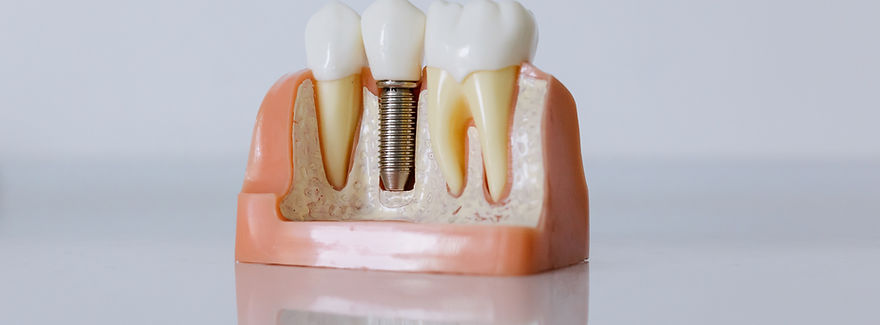
A permanent, long-term solution for replacing missing teeth.
A dental implant fixture is surgically placed into the jawbone, acting as an artificial tooth root. After the bone heals and integrates with the implant (osseointegration), a custom-made crown is attached.
Standard Implant Procedure:
-
Assessment: 3D CT scans and intraoral scanning to evaluate bone quantity and quality.
-
Surgery: The implant post is placed into the jawbone.
-
Healing: 3-6 months for osseointegration (bone fusing to implant).
-
Restoration: An abutment and crown are attached.
Bone Grafting (for Insufficient Bone):
When the jawbone is too thin or soft to support an implant, bone grafting is required. This involves:
-
Purpose: The graft material serves as a scaffold for the body to regenerate new bone, increasing bone volume and density to securely support the implant.
-
Timing: Grafting may be performed 4-6 months before implant placement, or in some cases, simultaneously with implant insertion if primary stability is achievable.
Sinus Lift (for Upper Jaw Implants):
The posterior upper jaw (molar/premolar area) often has insufficient bone height due to the maxillary sinus being too close.
A sinus lift (sinus augmentation) is a procedure to address this:
-
Procedure: The sinus membrane is gently pushed upward (lifted) through a small access site.
-
Grafting: The space created beneath the lifted membrane is filled with bone graft material, increasing bone height.
-
Healing: After several months of healing, the newly formed bone provides adequate height and density for secure implant placement.
-
Approaches: Can be performed simultaneously with implant placement (if minimal lift is needed) or as a staged procedure (if significant bone height is required).